A complete day of first aid training can really feel daunting when you initially consider the schedule. After that you see colleagues going out of fast first aid courses claiming, "It was a lot, however I feel ready now," and you begin to ask yourself whether a solitary day really can prepare you to act in a crisis.
I have actually educated and made first aid and CPR training for many years, consisting of express first aid courses for workplaces that might not spare staff for longer programs. Done well, a fast first aid course is not a faster way in the dangerous feeling. It is a focused, thoroughly structured learning experience that provides you a solid first aid certificate and useful confidence in one long, concentrated day.
Done improperly, it is a blur of PowerPoint slides that leaves you with a card in your purse and little else.
The difference hinges on assumptions, framework, and how honestly you treat the compromise in between rate and deepness. Allow us walk through what a truly effective fast first aid course looks like, what it can cover, and just how to judge whether it matches your real‑world needs.
What "Fast-Track" Actually Means
When training companies market a fast first aid course, they are usually discussing among 3 layouts:
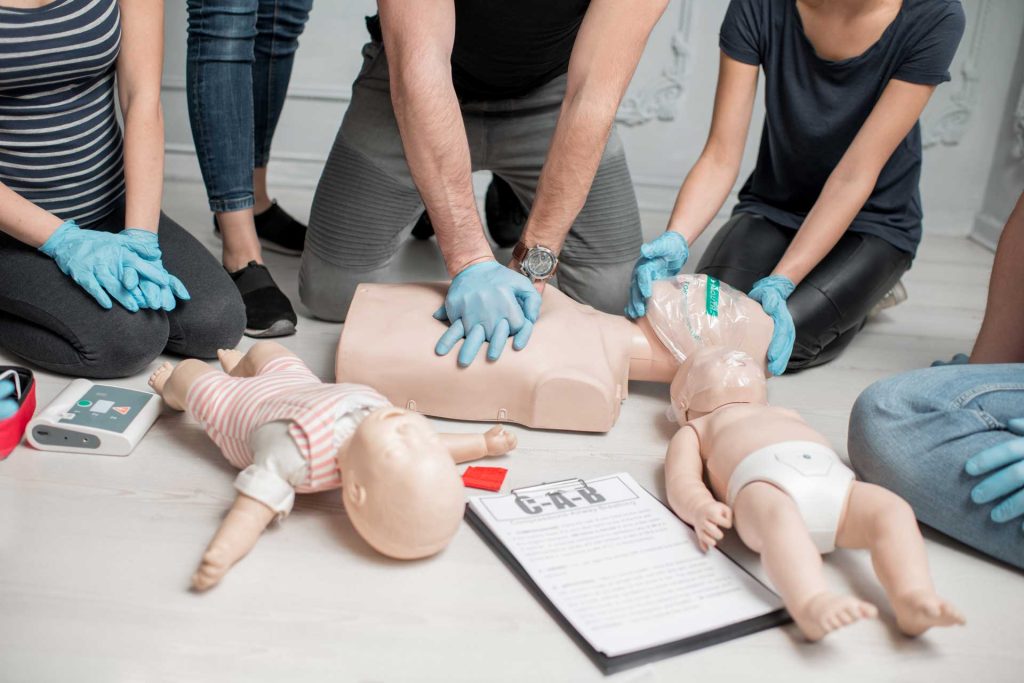
The initial layout, the blended fast first aid training design, is normally one of the most reliable. Learners full online modules at their own rate, typically over several days, then attend a solitary in‑person day to place everything right into method. That face‑to‑face day can be truly hands‑on instead of a thrill via slides, because the ideas are already familiar.
The 2nd layout can function, but it is a lot more demanding, specifically for individuals new to first aid and CPR. If every min of the day is utilized well, you can still finish proficient and positive. If time is lost to admin, delays or undistinct mentor, the course becomes demanding for everyone.
The third, the express first aid correspondence course, is perfect for individuals whose abilities are mainly there but a little bit rusty. Fast CPR correspondence course particularly work for medical care employees, safety and security personnel, and child care professionals who use CPR training usually sufficient to keep in mind the fundamentals, however desire upgraded standards and fresh practice.
Short does not suggest superficial necessarily. Short indicates the course developer needs to be ruthless about what issues most when a person is not breathing, is bleeding greatly, or is having a seizure, and what can reasonably be left to longer or specialist training.
What You Can Realistically Learn In One Day
When I prepare a single‑day first aid and CPR course, I start from a simple concern: "What do I want this person to be able to do in the initial ten mins of a medical emergency situation?"
The answer guides the core subjects. A strong one‑day fast first aid and CPR course commonly covers:
Cardiopulmonary resuscitation (CPR). That indicates identifying cardiac arrest, calling for aid promptly, performing high‑quality upper body compressions, and using an automated outside defibrillator (AED). The most effective fast CPR courses provide you several rounds of hands‑on method, not just a demonstration.
Airway and breathing issues. You ought to leave able to take care of choking in adults, children, and babies, identify breathing problems such as bronchial asthma strikes, and understand how to put someone in the recovery position.

Serious blood loss and wounds. You require to know just how to apply direct pressure, use plasters and improvisated dressings, handle embedded items, and understand when a tourniquet or hemostatic dressing could be required in your setting.
Shock and flow issues. Not the textbook physiology, yet the functional indicators: light, chilly, sweaty skin, fast pulse, altered frame of mind. And just how to respond with reassurance, positioning, and quick activation of emergency situation services.
Common medical emergencies. A lot of fast first aid courses cover a minimum of the basics of seizures, strokes, cardiovascular disease, allergic reactions, and diabetic emergencies. You discover what indicators to expect and what to do while waiting for paramedics.
Minor injuries. Burns, sprains, nosebleeds, and small cuts appear basic, yet they are where individuals usually improvise severely. An excellent instructor will certainly provide you sensible, low‑tech approaches you can use at home or at work.
Those that collaborate with youngsters may instead pick an express childcare first aid course, or an express childcare first aid training day that adds pediatric‑specific web content: infant CPR, febrile convulsions, choking in kids, and usual play area injuries. I have seen child care personnel noticeably unwind when they have exercised these abilities on child‑sized manikins, due to the fact that the anxiety of "Suppose something occurs on my watch?" has been attended to with real technique, not simply theory.
The first aid and CPR material might seem like a lot, but the key is repetition and concentrated situations, not endless subjects. If, by the end of the day, you can examine responsiveness, telephone call for help clearly, begin CPR, control severe blood loss, and keep a casualty secure and tranquil until help shows up, the course has done its core job.
Where Fast Courses Have Limits
Every express first aid course has to leave something out. That is not a flaw, it is an honest constraint.
What normally obtains trimmed in a fast first aid or express CPR course?
Extended theory. You will get the vital "why," but not a full lecture in composition. The majority of grownups do not need detailed cardiac physiology to press set in the center of the chest.
Niche circumstances. Complicated environmental emergencies, chemical direct exposures, or very specific office hazards frequently require specialist first aid training or different modules.
Long method on every variation. You might practice CPR on an adult manikin and only see a presentation of baby CPR, or vice versa, depending upon the course. That might be great for a white-collar worker, yet except a person functioning daily with babies.
Assessment deepness. Numerous fast certification programs make use of continual monitoring rather than extensive official examinations. This can be extra gentle and still legitimate, however it means you should stay engaged from the initial practice drill to the last.
Be clear concerning your requirements. If you service a building site, overseas center, or remote building, or you supervise youngsters with clinical problems, a conventional fast first aid course near you may not cover all the scenarios you deal with. You might still do the one‑day course for a solid foundation and after that add targeted modules.
I have had students show up anticipating a fast first aid course to make them "practically like a paramedic." That is not what a one‑day course can or ought to do. It can make you a qualified, calm spectator that acquires crucial time for a casualty up until experts arrive.
Who A Fast-Track First Aid Course Matches Best
People select first aid and CPR training for extremely different factors. For some, it is an office requirement. For others, the inspiration is very personal after experiencing an emergency.
A fast first aid course is normally a great fit if you identify yourself in at least among these summaries:
You are time‑poor yet determined, and can dedicate to a single, continuous day as opposed to a number of evenings. You require a first aid certificate swiftly for a task application, volunteer position, or conformity deadline. You already have some exposure to emergencies, such as health care assistants, trainers, or lifeguards, and need structured CPR training and an identified credential. You favor extensive discovering to reduce drip‑feed classes, and you are comfortable staying focused for a full day. You are restoring existing abilities through a fast CPR refresher course or express first aid refresher and primarily require upgraded guidelines and practice.Where a one‑day format might not be perfect is for students with substantial language obstacles, proficiency obstacles, or solid stress and anxiety around medical topics. I have actually seen very qualified individuals panic in a single‑day course merely because the pace felt relentless.
In those cases, a multi‑day or night layout with more constant breaks, smaller teams, or added language support can make the distinction in between scratching with and leaving genuinely capable.
Anatomy Of A Well-Designed Fast First Aid Day
Not all fast first aid courses are equivalent. The most effective ones really feel organized but not rushed, functional as opposed to theoretical, and surprisingly invigorating regardless of the hefty content.
A typical express first aid training day that hits the mark normally looks something like this.
The early morning starts with scene safety and security and the total first aid strategy: check for danger, introduce yourself, get consent where proper, and call for aid early. You may go through a few quick scenarios as a group, finding out exactly how to pass on tasks like calling emergency services or fetching an AED.
From there, you relocate right into CPR training. Good first aid and CPR training classes keep theory limited and afterwards quickly place you on the floor with manikins. You practice upper body compressions, rescue breaths if included in your area's standards, and AED use in other words, repeated blocks. Responses gadgets, if available, provide you real‑time details on deepness and rate of compressions. By late morning you must have finished several rounds with mentoring and corrections.
Late early morning commonly brings choking monitoring, the recovery setting, and fundamental air passage administration. Below the teacher's experience issues. People learn much faster when they see just how these abilities play out in messy real circumstances, not just optimal textbook cases.
The afternoon normally changes to blood loss, injuries, shock, burns, fractures, and common clinical emergencies. A knowledgeable trainer makes use of situations: possibly a substitute autumn from a ladder with presumed spinal injury, or a co‑worker found confused and perspiring at their desk. You work through what you would state and do, not simply which box to tick on a form.
Toward the end of the day, there need to be time for combination: brief sensible evaluations, concerns, and clarification of what you are and are not expected to do as a very first aider. A great instructor leaves you with sensible borders. You do not diagnose, suggest medications, or change treatment. You offer immediate, sensible assistance, and you know when to go back as professionals take over.
For an express child care first aid course, the very same arc uses however with child‑specific variations. Baby choking, youngster CPR, allergies to foods, and handling a subconscious kid are exercised much more extensively. In my experience, child care workers worth role‑playing conversations with worried moms and dads virtually as high as the physical techniques, and a great course makes space for that.

How To Choose The Right Fast First Aid Course
Typing "fast first aid course near me" into an online cpr refresher course Logan search engine will certainly offer you a lengthy listing of providers, some exceptional, some mediocre. A shiny web site does not equal strong first aid training.
Look for a couple of functional markers of quality.
First, check accreditation. Is the service provider identified by the pertinent national body, wellness authority, or sector regulatory authority? For offices, your security policeman or HR group will generally recognize which first aid courses and first aid and CPR courses meet your lawful requirements.
Second, take a look at the course outline. It needs to plainly note first aid and CPR, AED usage, bleeding control, and significant clinical emergency situations. If the synopsis is obscure, with even more advertising phrases than specifics, that is a warning sign.
Third, inquire about teacher experience. The very best instructors blend scientific or area background with training skill. A paramedic who can not interact plainly will not offer you well, yet nor will a trainer that has never ever been in an actual emergency.
Fourth, recognize the learning layout. A mixed express first aid course with pre‑course on the internet modules permits better use of your face‑to‑face time. Pure class fast first aid training can still be excellent, however extra depends upon the trainer's discipline.
Finally, clarify the certification. See to it the first aid certificate stands through you require, commonly 2 or 3 years, which it is recognized for your details sector. Some duties, especially in child care and health care, call for specific types of first aid and CPR course, such as express childcare first aid courses with pediatric emphasis or innovative resuscitation for clinicians.
If a provider can not respond to those questions plainly, maintain looking.
How To Prepare So Eventually Actually Counts
A one‑day express first aid or express CPR course awards prep work. Even a little work in advancement minimizes tension during the course and allows you concentrate on hands‑on method instead of note‑taking.
Here is a straightforward preparation list that I have seen make an actual difference for learners:
Read any kind of pre‑course materials and full online components before the training day, not during breaks. Sleep correctly the night prior to and arrive well‑hydrated and fed; physical method, especially CPR, is strenuous. Wear comfy garments that lets you kneel on the floor, relocation freely, and apply bandages without fuss. Think regarding your real atmosphere, such as workplace, health club, or childcare facility, and bring concerns concerning scenarios you may in fact face. Clear your routine as high as possible so you are not distracted by job calls or messages during the day.I once had a supervisor go to with their laptop open next to the manikin, attempting to respond to emails in between compressions. They passed the course, however they later on confessed they retained much much less than associates that had switched their phones off and dedicated fully to the training. A fast course demands presence.
What "Fast Certification" Truly Gets You
People often talk about fast certification as if the certificate itself is the objective. The card or digital record is essential in offices, specifically for compliance, yet the real worth is different.
First, it gives you a shared language with emergency solutions. When you call an ambulance and can claim plainly, "The client is unconscious, not breathing generally, we have started CPR, AED attached," you speed up the decision‑making on their side.
Second, you acquire the confidence to act in spite of adrenaline. The initial actual emergency situation after a first aid course never ever looks cool. It may be a member of the family sagged on the sofa, a stranger in a car park, or a kid on a sports area. Training does not eliminate the shock, however it offers your mind a script to follow when everything feels chaotic.
Third, there is a causal sequence. In work environments where numerous individuals total fast first aid courses or express CPR training together, security society enhances. People discover threats previously, speak out regarding risks, and step in quicker when a person appears unwell.
I bear in mind one workplace where a staff member had a seizure. Two personnel that had lately completed a fast first aid and CPR course managed the scene smoothly till paramedics arrived. Weeks later, others in the office asked to publication right into the following offered course. They had seen the distinction training made.
Keeping Skills To life After A One-Day Course
The biggest weakness of any fast first aid course is not the course itself, but what takes place afterward. Without technique, abilities decay. That is not an opinion, it is well recorded. Within months, CPR high quality begins to go down, and within a year many people lose self-confidence in their ability to act.
You can counter this without staying in a classroom.
Revisit your course publication or electronic resources every couple of months, also for 20 minutes. Watch short CPR training videos from reliable organizations and stalk the activities in the air.
Make a practice of mental rehearsal. When you see a jampacked occasion, imagine just how you would call for help or find an AED. When you walk through your workplace, notice where first aid sets and defibrillators are located.
If your provider provides short fast CPR courses or express CPR courses as standalone refresher courses, take into consideration joining one mid‑way with your certificate period. These fast CPR or fast cpr refresher courses commonly focus greatly on technique and upgraded guidelines.
For those in functions with greater direct exposure to emergencies, such as safety and security, physical fitness instructors, or child care experts, organizing express childcare first aid training or first aid and CPR training classes CPR first aid skill training each year keeps skills sharp. Also if your certificate is valid for longer, yearly refreshers are an audio investment.
The point is simple: the one‑day financial investment on your calendar is the begin, not the whole story.
Realistic Expectations On The Day
Anticipating just how a fast first aid course will certainly really feel aids you speed yourself.
You should anticipate to be literally tired by the end. Executing numerous rounds of CPR on a manikin takes effort. Stooping, bending, and moving clients right into the recuperation setting utilizes muscular tissues much of us overlook in desk work. That is typical and component of the learning.
You may additionally locate some material mentally heavy. When we talk about cardiac arrest, significant injuries, or child emergency situations, people often recall individual experiences. A good instructor will certainly provide space for that and check in with the group. If you need a time-out or feel overwhelmed, say so. That is not a weak point, it is self‑care.
You are not anticipated to remember every technical information perfectly. What matters is that you entrust a clear process in your head for the most vital circumstances. For example: examine security, check response, yell for aid, open respiratory tract, check breathing, start CPR, send for AED. Rep throughout the course cords that series in.
Trust the procedure, ask concerns, and concentrate on doing as opposed to attempting to make a note of every word.
Bringing It Back To Why You Are There
Behind every enrolment type for a fast first aid or express CPR course, there is generally a story.
Sometimes it is practical. You need first aid and CPR for a mentoring role, or your employer demands first aid and cpr training classes for health and wellness compliance. Occasionally it is deeply individual. A moms and dad signs up for an express childcare first aid course after their child had a frightening febrile seizure. A coworker joins a fast cpr course since a previous incident left them really feeling helpless.
Whatever your factor, a fast first aid course is among the most efficient uses of a solitary day you can select. It transforms vague concern into concentrated capacity. It offers you a clear, practiced response when somebody around you has the worst five mins of their life.
Pick your supplier very carefully. Prepare enough that your brain is free to involve. Deal with the day as the start of a skill, not a one‑off hurdle. Your future self, and potentially someone you have never ever fulfilled, may eventually be really happy you did.